Stainless Steel Alloy


Request a Quote
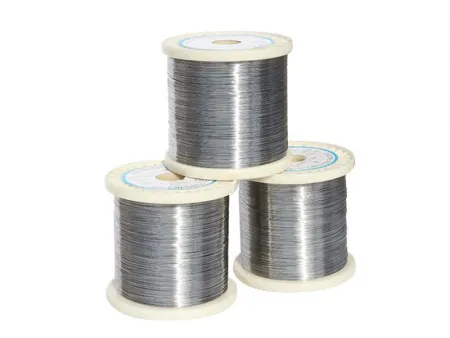
Stainless Steel Alloy Wire
- Thickness: 0.3mm-200mm
- Width: 1000mm-2500mm
- Length: 2000mm-6000mm, or customizable
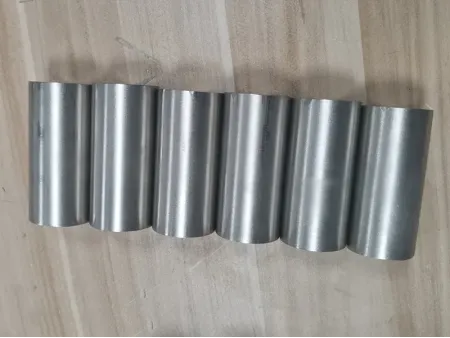
- Diameter: 2mm-500mm
- Length: 1m-6m, or customizable
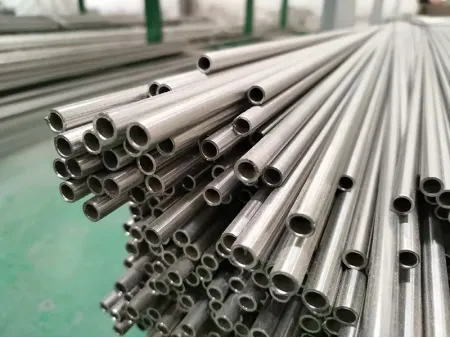
- Outer Diameter: 3mm-800mm
- Wall Thickness: 0.5mm-30mm
- Length: 6m, or customizable
- Diameter: 0.02mm-12mm
- Delivery Forms: Coiled wire or straight wire
- Thickness: 0.05mm-3mm
- Width: 5mm-800mm
- Coiled Strip Weight: Commonly 50-200 kg
- Common Type: Angle steel, channel steel, I-beam, H-beam
- Size: Compliant with standards or customizable
Standard Compliant
Our production adheres to JIS G4313 standards, ensuring compliance with international quality benchmarks.
Equivalent overseas standards are listed for reference.
- ISO 12, 11, 10, 19
- RUSSIA 12KH18H9, 08KH18H10, Z2CN18.09, Z6CNDT17.12, 03KH17H14M2, Z2CND7.12N, ZCNS18.09A2
- AISI, A STM 302, S30200, 304, S30400, TP304, 304L S30403, TP304L, 316Ls S31603, TP316L, 310S, S31008s TP310S, 309S, S30908, 316Ns S31651, 304
- DIN X12CrNi88, X5CrNi89, X2CrNi189, X10CrNiTi189, X10CrNiMoTi1810, X2Cr, X2CrNiMoN1812
- BS 302S25, 304S15, 304S12, 320S17, 316S12
- GB/T 1Cr18Ni9, 0Cr18Ni9, 00Cr19Ni10, 1Cr18Ni9Ti, 0-1Cr18Ni12Mo2 Ti, 00Cr17Ni14Mo2, 0Cr25Ni20, 0Cr23Ni13, 0Cr17Ni12Mo2N, 00Cr17Ni13Mo2N, 0Cr18Ni12Mo2Cu, 00Cr18Ni14Mo2Cu2, 0CM9NM9N
Common Types of Stainless Steel
| Type | Austenitic Stainless Steel | Ferritic Stainless Steel | Martensitic Stainless Steel | Duplex Stainless Steel | Precipitation Hardening Stainless Steel |
| Features | Non-magnetic, excellent corrosion resistance, good toughness, and machinability | High chromium content with little or no nickel, cost-effective, good oxidation resistance | High carbon content, high hardness, lower corrosion resistance | A mix of austenitic and ferritic structures, high strength, and excellent corrosion resistance | High strength and hardness achieved through heat treatment, while maintaining good corrosion resistance |
| Chemical Composition | Chromium (16-26%), Nickel (6-22%), with some containing molybdenum or nitrogen | Chromium (10.5-30%), low carbon content | Chromium (11-18%), high carbon content | Chromium (19-28%), Nickel (4.5-8%), often contains molybdenum or nitrogen | Chromium (15-17.5%), Nickel (3-7%), with additions of titanium, aluminum, copper, etc. |
| Application | Food processing equipment, medical devices, chemical installations | Automotive exhaust systems, household appliance casings | Cutlery, bearings, medical tools | Chemical equipment, marine engineering | Aerospace, nuclear industry |
| Grade | 304, 316, 310S | 430, 409 | 410, 420 | 2205, 2507 | 17-4PH |
Chemical Composition
| Iron (Fe) | Basic element |
| Chromium (Cr) | 10.5%-30% (to provide corrosion resistance) |
| Nickel (Ni) | 3%-35% (to enhance ductility and corrosion resistance) |
| Molybdenum (Mo), Titanium (Ti), Manganese (Mn), or other elements based on special properties required | Negligible content |
Physical Properties
| Density | 7.75g/cm³-8.1g/cm³ |
| Melting Point | 1370°C-1510°C (depending alloy grade) |
| Thermal Conductivity | 10-30 W/(m·K) (200°C) |
| Coefficient of Thermal Expansion | Austenitic stainless steel: 16×10⁻⁶/K (20°C-100°C) Ferritic stainless steel: 10×10⁻⁶/K |
| Electrical Resistivity | 0.73-1.0 μΩ·m |
Mechanical Properties
| Tensile Strength | Austenitic Stainless Steel | 500-750 MPa (e.g. 304, 316) |
| Martensitic Stainless Steel | 800-1500 MPa (e.g. 420, 440C) | |
| Yield Strength | 200-600 MPa | |
| Elongation at Break | 15%-40% | |
| Hardness | Annealed state | 150-300 HB |
| After aging treatment | Up to 600 HB (e.g. 440C) | |
Features
- The oxide film protective layer formed by chromium gives stainless steel excellent corrosion resistance in various environments.
- Different types of stainless steel maintain good mechanical properties over a wide temperature range.
- Easy to process, form, and weld, making it suitable for the manufacture of complex-shaped products.
- Can achieve various surface finishes such as polishing and sanding.
- Non-toxic and easy to clean, making it ideal for the food processing and medical fields.
- Due to its durability and corrosion resistance, it reduces the need for maintenance during long-term use.
Applications
- Construction and infrastructure: Building facades, bridges, railings, etc.
- Food processing and pharmaceuticals: Equipment manufacturing, such as mixers, reactors, conveyors, etc.
- Chemical and petrochemical: Manufacturing reaction vessels, heat exchangers, pumps, valves, etc.
- Medical devices: Surgical instruments, implants, dental tools, etc.
- Transportation: Automotive exhaust systems, railway vehicle parts, shipbuilding, etc.
- Household appliances and kitchenware: Refrigerators, dishwashers, knives, cookware, etc.
- Environmental technology: Wastewater treatment facilities, air purification systems, etc.
- Energy industry: Cooling system components for nuclear and thermal power plants
Packaging