Ceramic Cleaner Cones & Reducer Cones

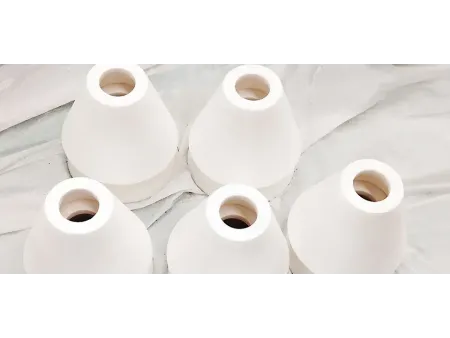
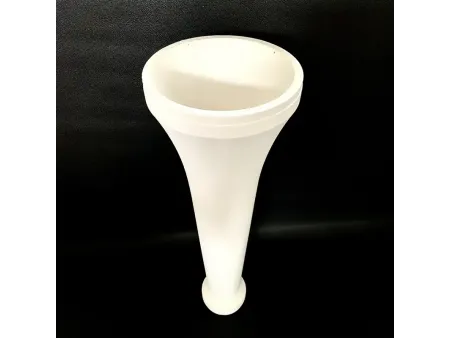

Ceramic wear-resistant cones are widely used in screening and separation equipment for industrial materials in paper mills, petroleum, mining, steel plants, and power stations. Typical applications include cyclones, slag removers, pulp inlet chambers, underflow outlets, reducers, and similar components.
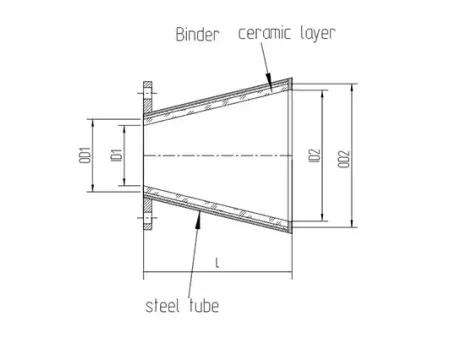
The outer shell of ceramic cones can be made of steel, polyurethane, or other materials, while the inner lining consists of highly wear-resistant ceramic. This composite structure combines the excellent high-temperature wear resistance and corrosion resistance of ceramics with the high strength and toughness of the outer shell material, effectively preventing ceramic damage. The integrated design allows for easy installation and replacement.
- Integral sintering
Ceramic material is formed as a single piece using a mold, then compacted by cold isostatic pressing and sintered at high temperature. Reducers and concentric or eccentric cones produced by this method have excellent structural integrity and high mechanical strength. - Tile bonding method
Pre-sintered ceramic tiles are bonded to the surface of a metal substrate using high-strength ceramic structural adhesive to form a wear-resistant ceramic lining. This method is suitable for manufacturing wear-resistant ceramic cones and other special-shaped components.
Alumina Ceramic Cones Made primarily from alumina, offering high hardness, excellent wear resistance, good corrosion resistance, and high temperature resistance. This is the most commonly used wear-resistant ceramic material.
Silicon Carbide (SiC) Ceramic Cones Provide higher hardness and wear resistance, with outstanding performance in high-temperature, high-abrasion, and highly corrosive environments. Cost is relatively higher.
Zirconia (ZrO₂) Ceramic Cones Feature superior impact resistance and self-lubricating properties, making them suitable for materials with large particle size and high purity requirements.
Yes. Ceramic cleaner cones offer excellent wear resistance and corrosion resistance and are well suited for removing impurities from pulp processing systems.
Service life can be extended by avoiding excessive mechanical impact and large temperature fluctuations. Regular inspections should be conducted to identify surface cracks or damage, with timely replacement or maintenance as required. Wear conditions should be monitored and maintained periodically.
Once cracks occur, ceramic products are generally not repairable. Use should be stopped immediately, and the cause of cracking, such as impact, thermal stress, or improper installation should be identified. If performance or safety is affected, replacement or after-sales support is recommended.