Pressurized Rubber Kneader Machine


- Applications
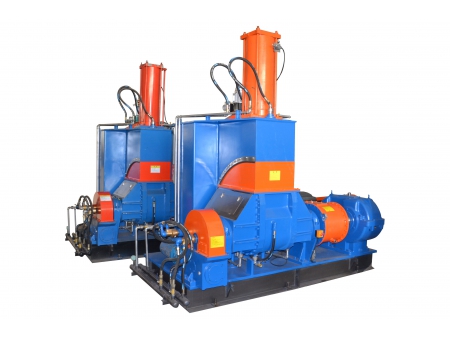
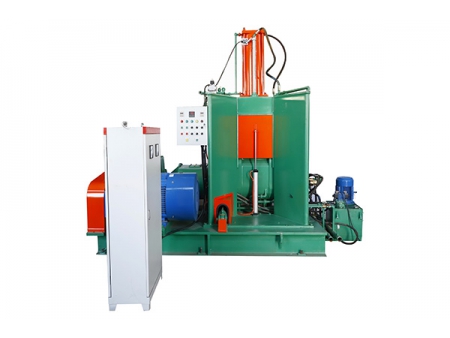
The pressurized rubber kneader machine is engineered for use in rubber and rubber product factories. The kneader helps to process rubber for the production of tires, cables, rubber hoses, belts, shoes, and seals. The machinery is also versatile in that it can be used to mix oil paints, dyes, ceramics, medicines, filmstrips and other products of similar makeup.
Product parametersModel X(S)N-3 X(S)N-20 X(S)N-35 X(S)N-55 X(S)N-75 X(S)N-110 Total volume of internal mixing L 3 20 35 55 75 110 Motor power kW 7.5 30 55 75 110 185 Tilt angle ° 140 140 140 140 140 140 Rotor speed (front/rear) r/min 36/30 36/30 36/30 36/30 36/30 30/24.5 Compressed air working pressure MPa 0.5~0.8 0.5~0.8 0.5~0.8 0.6~0.8 0.6~0.8 0.6~0.8 Compressed air flow m3/min ≥0.9 ≥0.9 ≥0.9 ≥1.0 ≥1.0 ≥1.5 Cooling water pressure MPa 0.3~0.4 0.3~0.4 0.3~0.4 0.3~0.4 0.3~0.4 0.3~0.4 Vapor pressure MPa 0.5~0.8 0.5~0.8 0.5~0.8 0.5~0.8 0.5~0.8 0.5~0.8 Dimension Length mm 1638 2630 3200 3230 3325 4075 Width mm 906 1520 1900 1927 2615 2712 Height mm 1720 3300 2950 2958 3105 3580 Features-
The main rotor, ω-shaped chamber base, and side plate ends are designed with thicker alloy material (≥4mm) and a chrome plating layer of ≥0.15mm. These enhancements significantly extend the lifespan of the components, ensuring durable performance even in demanding rubber mixing processes. The increased thickness improves wear resistance, contributing to consistent and reliable operation over extended production cycles
The hydraulic top ram applies precise pressure to the rubber during the mixing process, which boosts production efficiency by 22%. This improved pressure control not only enhances the mixing consistency but also reduces processing time, helping manufacturers achieve higher throughput without compromising quality
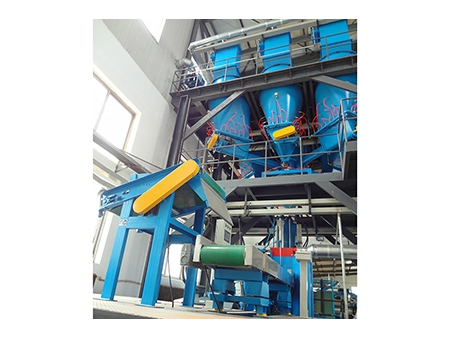
The independent and well-designed auxiliary feeding system effectively resolves feeding issues, ensuring smoother operation and minimizing disruptions during the production process
- With a high level of automation, the system is controlled by a PLC, ensuring precise, consistent, and efficient operation throughout each production cycle.
Structural Overview- Mixing chamber: constructed from premium alloy steel for welding→annealing→finish machining→surface hard chrome plating→polishing treated using 400 grit abrasive cloth. Chrome layer thickness is 0.10mm with hardness of HV900~1000.
- Front and rear rotor: rotor is made of cast steel with manganese and other alloy materials→the head of rotor is welded with wear-resistant hard alloy with a thickness of 3~5mm→processing and polishing treatment→full body is treated by hard chrome plating with a thickness of 0.10mm.
- Internal mixing seal system: labyrinth seal system to prevent leakage of powder and feed materials.
Our advantage- Pressurized kneader machines are designed and manufactured according to China Chemical Industrial Standards HG/T 3798-2005 & HG/T 3799-2005 and manufacturer enterprise standards.
- Inspections are performed according to China National Standards GB/T 1182-2008 & GB/T 1184-1996.
- X(S)N-35, X(S)N-55 and X(S)N-75 are three widely used kneading machine types, on average selling 60 pieces each year.
What is the best way to determine which pressurized rubber kneader model suits my production?The choice of model primarily depends on the volume of rubber you plan to process. For reference, the X(S)N-35L kneader, using a rubber density of 1.1, can handle about 40 kg per batch. Each cycle typically runs for 8–10 minutes, so you can expect an hourly output of up to 240 kg.Which parts are most likely to wear out over time?The components that experience the most wear are the cylinder seals and the rotor sealing rings. Under standard working conditions, their service life generally ranges from 3 to 5 years.What configuration options are available for the pressurized rubber kneader machines you offer?As standard, our pressurized rubber kneader comes equipped with a pneumatic top ram, a fixed-speed motor, a mechanical tilting mixing chamber, and two-wing shear rotors. If needed, we can customize the setup to include features such as a hydraulic top ram, a variable frequency motor, or a hydraulic tilting chamber.
For applications involving more abrasive compounds, such as mixes containing a high proportion of calcium carbonate, it’s also possible to apply wear-resistant hardfacing to the mixing chamber and rotor surfaces to extend durability.Related ManufacturiesLeave MessageSimilar Manufacturies and PartsManufacturer AdvertisingSimilar Manufacturies and PartsVideos -