Mechanical Reactor Seal

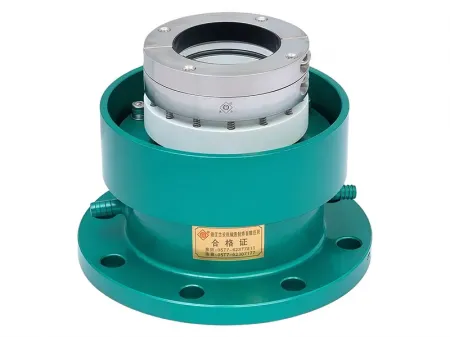
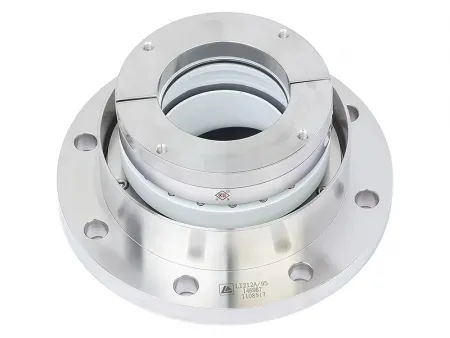
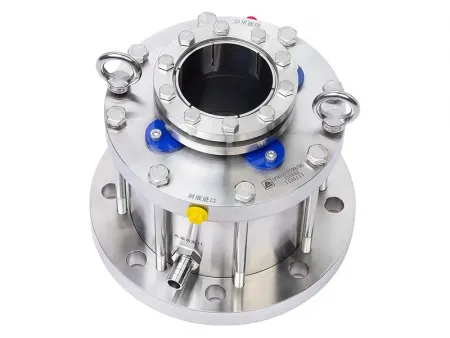

The mechanical reactor seal helps you operate a glass-lined reactor more safely by reducing leakage risk, protecting product cleanliness, and supporting stable long-term performance in demanding process conditions. The mechanical reactor seal is especially important when handling corrosive, flammable, explosive, or toxic media, where sealing reliability directly affects both production safety and process control.
Installed in the top drive system of a glass-lined reactor, the mechanical reactor seal forms the dynamic seal between the agitator shaft and the reactor body. By isolating the process media from outside air and preventing external impurities from entering the vessel, the mechanical reactor seal helps maintain safe reactor operation and cleaner processing conditions. The design is matched to the operating requirements of glass-lined reactors, including pressure resistance, corrosion resistance, low vibration, and long service cycles.
- Widely Used Sealing Solution for Agitator Shafts
The mechanical reactor seal is the mainstream dynamic sealing solution for agitator shafts in glass-lined equipment. The sealing function is achieved through the precise contact between the rotating ring and the stationary ring, which form the sealing face. - Low Wear during Operation
The mechanical reactor seal uses a non-contact or micro-contact sealing method, which helps reduce wear and supports longer operating life. - Convenient Assembly with Precise Installation
The mechanical reactor seal requires accurate installation, while cartridge-type designs make assembly and replacement more convenient. - Stable Sealing Performance under Normal Operating Changes
The mechanical reactor seal maintains stable sealing performance and is not easily affected by small fluctuations in operating conditions. - Different seal types for different process requirements
According to the number of sealing faces, the mechanical reactor seal can be divided into single mechanical seals and double mechanical seals. According to the friction medium between the rotating ring and stationary ring, the mechanical reactor seal can be classified as wet-running, dry-running, or dry gas sealing.
According to the arrangement of the sealing faces, the mechanical reactor seal can also be divided into radial sealing and axial sealing.
| Size | d (mm) | D1 (mm) | D2 (mm) | n-Φ (mm) | H (mm) | |
| Shaft Diameter | 40 | 40 | 175 | 145 | 4-Φ18 | 135 |
| 50 | 50 | 240 | 210 | 8-Φ18 | 140 | |
| 60 | 65 | 240 | 210 | 8-Φ18 | 150 | |
| 80 | 80 | 275 | 240 | 8-Φ22 | 160 | |
| 95 | 95 | 305 | 270 | 8-Φ22 | 170 | |
| 110 | 110 | 330 | 295 | 8-Φ22 | 195 | |
| 120 | 120 | 330 | 295 | 8-Φ22 | 195 | |
| 140 | 140 | 395 | 350 | 12-Φ18 | 200 | |
| 160 | 160 | 395 | 350 | 12-Φ18 | 205 | |