Bronze Wear Plates


-
Maximum Size Width 500 mm
-
Maximum Size Thickness 50 mm
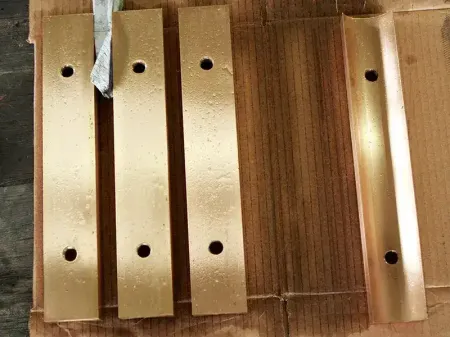
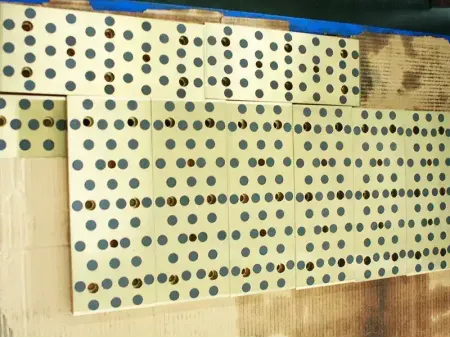
Bronze wear plates are flat sliding wear parts made from copper alloys, used to reduce friction and guide moving components in various types of machines. They’re commonly found in molds, mechanical guide rails, and other equipment that require smooth and precise movement. Wear plates combine good thermal and electrical conductivity with excellent corrosion resistance. Many of them feature self-lubricating properties thanks to solid lubricants like graphite or molybdenum disulfide embedded in the bronze. During operation, these lubricants gradually release to form a thin protective film that minimizes friction and wear.
In industrial settings, bronze wear plates are used as guiding and supporting components in equipment such as presses, forging machines, rolling mills, and sliding bases. They help keep parts aligned and ensure smooth, steady movement under heavy loads. Durable and cost-effective, wear plates are a good choice for applications that need consistent performance and long service life.
Bronze wear plates and guide plates are available in various sizes and configurations, tailored to different requirements. There are various bronze alloys available, including C86300 and C83600, each selected based on its specific performance characteristics.
| Material No. | | |
| Category | Manganese Bronze | Leaded Tin Bronze |
| Core Properties | • High shear strength and excellent fatigue resistance • Withstands long-term impact and vibration loads • Tensile strength: 550–700 MPa, elongation ≥ 15% | • Excellent wear resistance and anti-seizing properties • Stable casting performance and good machinability • Tight dimensional control after forming |
| Typical Applications | Used for couplings, automotive and engineering shock absorber parts, and flexible joints in marine equipment. | Used for gears, worm wheels, shafts, bearing bushes, and industrial nuts and bolts. |
Bronze wear plates are widely used in various industries, including lifting presses, truck braking and suspension systems, steel rolling mills, hydraulic machinery, forging equipment, and metalworking. They are also used in the automotive, steel, and power generation sectors.