Hydraulic Baler, Hydraulic Baling Press


Request a Quote
Closed Door Baler, Auto-Tie Baler
Video
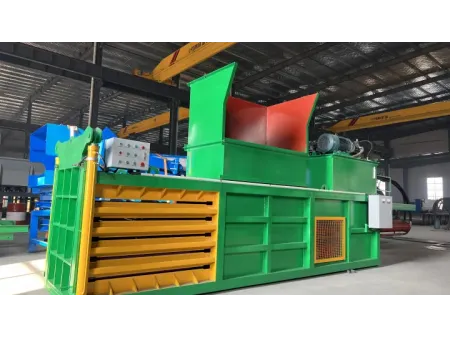
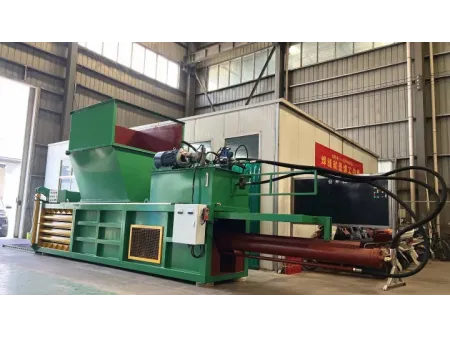
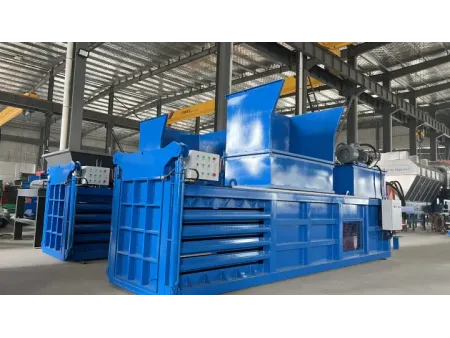
Hydraulic balers use hydraulic pressure to compress loose, bulky, or recyclable materials into compact bales, helping reduce storage space and transportation costs. The main structure usually includes the baler frame, hydraulic system, compression chamber, pushing cylinder, and related supporting components. During the baling cycle, the material is pressed into shape, the cylinder returns, and the finished bale is discharged for handling, storage, or transport. These baling presses are suitable for waste paper, plastic, cans, textiles, municipal waste, industrial solid waste, and other compressible materials.
Applications
- Before Baling
- After Baling
Technical Specifications
| Model | Max. Pressing Force (kN) | Bale Density (kg/m³) | Max. Bale Size L×W×H (mm) | Bale Weight (kg/bale) | Capacity (bales/h) | Power (kW) |
| 300 | 400-450 | 1000×600×800 | 200-250 | 4-6 | 7.5 | |
| 1000 | 1500×800×950 | 450-500 | 22 | |||
| 1200 | 1500×900×1100 | 600-700 | 30 | |||
| 1600 | 1700×1100×1300 | 950-1100 | 37 | |||
| 1800 | 1800×1200×1500 | 1300-1500 | 45 |
Features
- The hydraulic drive provides steady compression, and the baler can be operated manually or through PLC automatic control depending on the project setup.
- Spherical connection between the pushing cylinder and push head helps reduce stress on the oil seal, supporting longer service life.
- Automatic wire threading is available to simplify bale tying and reduce manual handling during the baling process.
- Equipped with a safety door to keep the material contained during compression, improving bale density while adding protection for daily operation.