Ballistic Separator


Request a Quote
Video
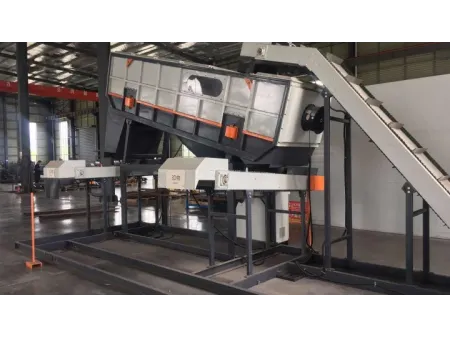
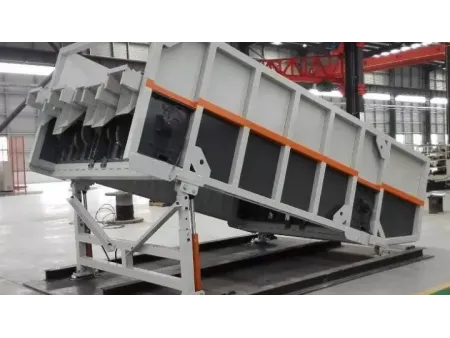
Ballistic separators separate mixed waste according to material shape, density, and size, which is why they are widely used in municipal waste, landfill stale material, construction and renovation waste, industrial waste, and paper recycling lines. The screen paddles move with an up-and-forward motion driven by eccentric shafts, spreading the material across the screening surface. During this process, rolling 3D materials such as plastic bottles, wood pieces, and cans move in one direction, while flat 2D materials such as film, paper, cardboard, and textiles move in another. Fine materials such as sand and food residue pass through the screen openings, leaving cleaner fractions for the next sorting or recovery stage.
Technical Specifications
| Model | |||
| Number of Paddles | 4 | 6 | 8 |
| Paddle Width (mm) | 322 | 322 | 322 |
| Paddle Length (mm) | 4500 | 6000 | 6000 |
| Operating Motion | Eccentric reciprocating motion | ||
| Screen Opening Size (mm) | Determined by material type | ||
| Motor Power (kW) | 15 | 22 | 22 |
| Capacity (t/h) | 6-10 | 10-15 | 15-20 |
Features
- Bouncing screen movement keeps material moving across the ballistic separator and helps clear the screen openings during operation, reducing blockage from plastic bags, cloth strips, dust, and other light materials.
- Three-way separation allows ballistic separators to divide fine particles, flat light materials, and heavier rolling items in one pass, giving the following equipment cleaner material to process.
- Designed with a modular structure that allows the ballistic separator to work with bag openers, crushers, air separators, and manual sorting conveyors in fixed, modular, or mobile sorting lines.