Large Diameter DTH Drill Bits

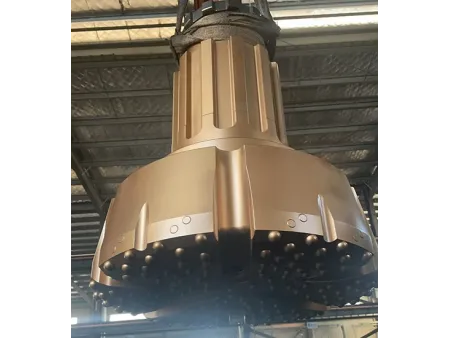
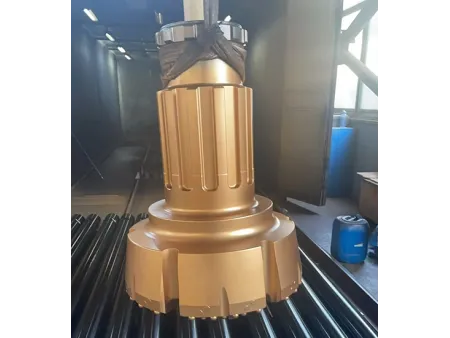
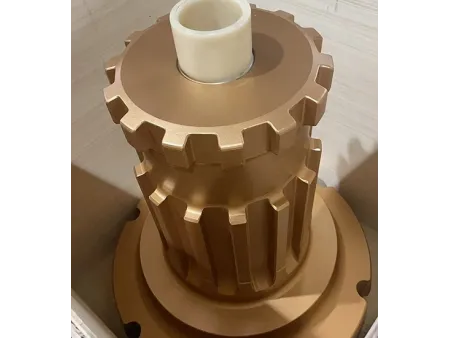

- Applicable hole diameter range: 305-1200mm
- Face designs: flat face, convex face, concave face, double-row button face, center-drop face
- Button types: domed button, semi-ballistic button, ballistic button, pointed button, flat button
Embedded installation methods for precast piles, CFA (continuous flight auger) rock-socketed piles, bored piles drilled into rock formations
| Model | | | | | |
| Length, L | 260mm | 258mm | 324mm | 321mm | 355.8mm |
| Diameter,Ø | 67mm | 82.5mm | 102mm | 118mm | 164.5mm |
| Length, L1 | 54mm | 54.5mm | 53mm | 57mm | 60.3mm |
| Diameter, Ø1 | 26mm | 32mm | 36.4mm | 41mm | 56mm |
| No. of splines | 8 | 8 | 8 | 8 | 8 |
| Recommended hole size | 105-130mm | 135-152mm | 155-190mm | 203-254mm | 245-305mm |
| Shank model | DHD112 NUMA120 SD12 QL120 | NUMA125 M140 | NUMA180 | NUMA240 | NUMA280 |
- High-strength bit body: The large-diameter bit body is manufactured from high-strength alloy steel, providing excellent resistance to cracking and body breakage under high-impact drilling conditions.
- Non-destructive inspection (NDT): Ultrasonic testing and magnetic particle inspection are applied to the bit body to eliminate material and forging defects, significantly reducing the risk of in-service failures.
- Oversized carbide buttons: Enlarged carbide buttons are used to extend wear life and enhance rock-breaking efficiency, improving overall drilling performance.
- Precision CNC machining: CNC machining of the bit body ensures high dimensional accuracy, reliable assembly, and consistent product quality.
- Reinforced skirt design: A specially engineered high-strength, high-toughness skirt enhances structural integrity and ensures stable performance under severe impact and torque loads.
- Spline shock-absorption design: The spline interface is integrated with damping buffer elements, reducing impact fatigue and significantly extending spline service life.
Carbide button breakage alone is not covered by warranty. Carbide buttons are designed to fracture rock with extremely high hardness and normally do not fail under standard drilling conditions. Breakage typically occurs when carbide buttons collide with materials of similar hardness, such as alloy steel objects left in the borehole. Prior to drilling, the bore area should be checked and cleared of metallic obstructions.
During drilling, abnormal noise may indicate button fracture. In such cases, drilling should be stopped immediately and the borehole cleaned to prevent secondary damage or cascading button failure.
Customization is supported, including color options, logo marking, and build-to-drawing or build-to-sample production. Customization can be provided for structural design, materials, and dimensions according to project requirements.