Electroplating Systems


Request a Quote
Process Principle & Unique Advantages
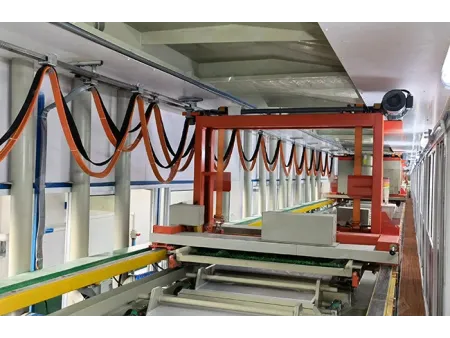
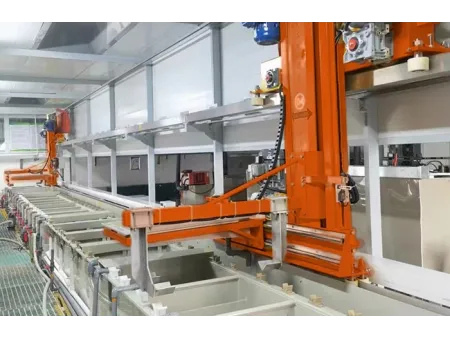
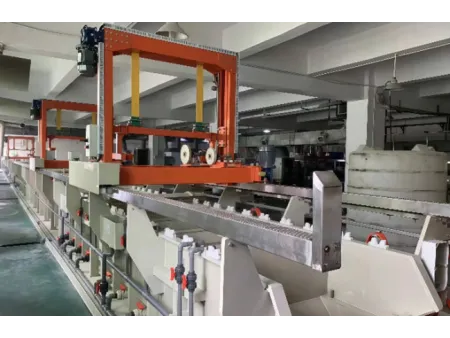
The rack plating line utilizes electrolytic principles to deposit metal or alloy layers onto workpieces. In this process, components are independently suspended on conductive racks and submerged into electrolytes containing metal ions. This method offers distinct industrial advantages:
- Surface Integrity Protection: Independent suspension prevents workpieces from colliding, effectively avoiding surface damage or scratches on delicate parts.
- Superior Precision & Control: Ensures uniform current distribution and controllable coating thickness, meeting the rigorous standards required for intricate geometries.
- Broad Material Compatibility: Ideal for high-end processes including gold, silver, nickel, copper, and tin plating, as well as specialized plastic plating.
Wide Industry Applications
The system is widely deployed in sectors requiring extreme precision and reliability:
- Aerospace & Defense: Military equipment, aerospace electronics, and aerospace-grade hardware.
- Advanced Electronics: Semiconductor devices, HTCC/DPC substrates, ceramic packages, and optical components.
- Automotive & Energy: New energy vehicle parts and high-performance automotive components.
Technical Specifications
(Example: Zinc Plating Line)
| Parameter | Specifications / Range |
| Tank Dimensions | Customizable: L (0.5–3m) × W (0.5–5m) × H (0.8–3m) |
| Tank Material | High-quality PP (Polypropylene) |
| Rectifier Power | 50A – 15,000A / 1–15V |
| Operating Temperature | 15 – 20℃ |
| Core Process Flow | Pre-treatment: (Thermal degreasing → Electrolytic degreasing → Rust removal) → Plating: (Pre-soaking → Electroplating) → Post-treatment: (Polishing → Passivation → Sealing) |