Active Harmonic Filter (AHF)

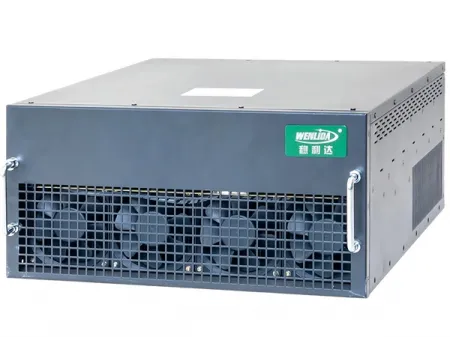
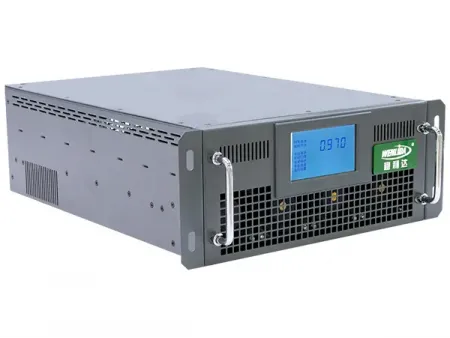
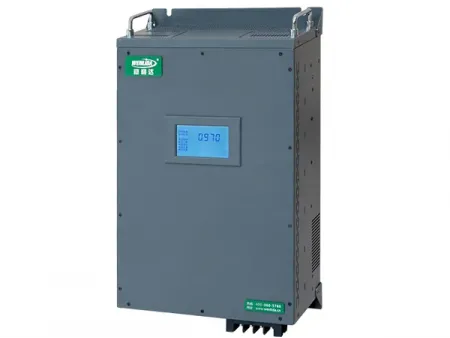

Active power filter for real-time harmonic mitigation and reactive power compensation
- Rated capacity: 30A / 50A / 75A / 100A / 150A / 200A
- Operating voltage: selectable 400V (-20% to 20%) / 220V (-15% to 15%)/ 690V (-30% to 15%, only for 100A)
- Operating frequency: 50/60Hz ± 5Hz
- Wiring method: selectable three-phase, three-wire, three-phase, four-wire
- Ambient temperature: -20℃ to 45℃
- Enclosure protection level: IP 20 as standard (higher protection levels are customizable upon request)
Active Harmonic Filters (AHF), also known as Active Harmonic Filter (AHF), help maintain clean and stable power by detecting and canceling harmonic currents in real time. Harmonics are unwanted distortions generated by non-linear loads such as variable frequency drives, welding systems, and computer equipment. The filters continuously monitor the current, analyze the harmonic content, and inject a compensating current of equal magnitude and opposite phase to neutralize distortion within the network. Besides harmonic mitigation, these filters also improve power factor and enhance voltage stability through dynamic reactive power compensation. They are widely used in industrial facilities, data centers, and commercial buildings where high power quality is essential for reliable and energy-efficient operation.
- Active harmonic filters (AHF) monitor load currents in real time and track harmonic variations with millisecond-level precision. They generate compensating currents equal in amplitude and opposite in phase to the detected harmonics, achieving accurate suppression and rapid compensation. This quick response helps prevent equipment overheating and false triggering.
- Intelligent algorithms identify harmonic characteristics and automatically adjust compensation strategies according to load changes and grid impedance variations. This adaptive control prevents harmonic amplification common in conventional LC filters, suppresses system resonance online, and maintains stable operation without manual intervention.
- PWM (Pulse Width Modulation) control technology allows the filter to remove harmonics across a wide frequency range, typically from the 2nd to the 50th order. This precise filtering improves current waveform quality, enhances power factor, and helps reduce energy losses along the distribution lines.
- Compact structure available in wall-mounted or rack-mounted designs. The plug-in modular layout simplifies installation, reduces downtime, enhances electromagnetic compatibility, and minimizes space and maintenance requirements.
- Integrated Compensation Functions Active harmonic filters (AHF) integrate multiple compensation features that work together to maintain clean and stable power quality across complex electrical networks.
- Harmonic Filtering: Supports full-spectrum or selective harmonic elimination, effectively reducing total harmonic distortion (THDi).
- Reactive Power Compensation: Dynamically regulates inductive and capacitive reactive power to maintain an optimal power factor.
- Three-Phase Balancing: Four-wire configuration eliminates neutral line overload and corrects load imbalance.
- High Performance High performance is achieved through advanced current control and efficient power conversion design, ensuring stable operation even under dynamic conditions.
- Current Control: High switching frequency (up to 20 kHz) balances low ripple current with fast dynamic response, effectively counteracting harmonic distortion.
- Conversion Efficiency: Filtering performance remains stable regardless of load or grid impedance changes. Resonance and harmonic amplification are avoided, line losses are reduced, and transformer load capacity is improved.
- System Capabilities Comprehensive system capabilities ensure flexible operation, wide compatibility, and reliable performance across various industrial and energy applications.
- Intelligent Operation: Equipped with a full-feature monitoring system that provides real-time analysis of harmonic spectra, compensation performance, and equipment status. Multiple operating modes are available, including harmonic filtering priority, reactive power priority, and combined control.
- Compatibility: Applicable to various environments such as photovoltaic and wind power systems, effectively suppressing high-order harmonics produced by inverters.
- Scalability: Modular design supports N 1 parallel redundancy and easy capacity expansion. Even when one module is replaced, system operation remains unaffected. Centralized control ensures uniform performance across all connected modules.
- Reliability: Maintains rated output even when harmonic current exceeds nominal capacity. Prevents resonance with grid impedance and remains stable under voltage and frequency fluctuations, with integrated reactive compensation enhancing overall stability.
- Equipped with SiC module technology that supports high switching frequency, low power loss, and strong voltage and temperature resistance. These features enhance power density, improve thermal stability, and increase overall system efficiency.
| General | Product type | Active Harmonic Filter (AHF) | |||||
| Rated capacity | 30A | 50A | 75A | 100A | 150A | 200A | |
| Operating voltage | Selectable 1. 400V (-20% to 20%) 2. 220V (-15% to 15%) 3. 690V (-30% to 15%, only for 100A) | ||||||
| Operating frequency | 50/60Hz ±5Hz | ||||||
| Wiring method | Selectable 1. Three-phase, three-wire 2. Three-phase, four-wire | ||||||
| Current sampling position | Selectable 1. Load side 2. Grid side | ||||||
| Parallel operation | Up to 12 units in parallel | ||||||
| Cooling method | Intelligent forced air cooling | ||||||
| General | Filter range | 2nd to 50th | |||||
| THDi (Total Harmonic Distortion) | < 5% | ||||||
| Three-phase unbalance protection | Supported | ||||||
| Instantaneous response time | < 50μs | ||||||
| Full response time | < 10ms | ||||||
| Noise level | < 65dB | ||||||
| Protection functions | Self-diagnosis and multiple protection features including over-voltage, under-voltage, frequency anomaly, over-temperature, over-current, short-circuit, phase-loss, DC bus over-voltage, DC bus under-voltage, IGBT fault, and inverter bridge reverse protection | ||||||
| Communication & Control | Extended functions | 10-channel TSC interface, capable of operating in combination with TSC/TSF | |||||
| Communication interface | RS485 port | ||||||
| Communication protocol | Selectable 1. Electricity master protocol 2. Modbus protocol 3. TCP/IP protocol | ||||||
| Display information | Displays grid parameters such as voltage, current, power, and harmonics | ||||||
| Monitoring method | Selectable 1. Independent module monitoring 2. Centralized module monitoring | ||||||
| Operating environment | Ambient temperature | -20℃ to 45℃ | |||||
| Relative humidity | ≤95%, non-condensing | ||||||
| Altitude | ≤1500m (for every 100m above 1500m, rated power decreases by 1%) | ||||||
| Enclosure protection level | IP20 as standard (higher protection levels are customizable upon request) | ||||||
| Installation | Selectable 1. Wall-mounted (modular) 2. Rack-mounted (modular) 3. Cabinet type (integrated) | ||||||
| Wiring method | Selectable 1. Bottom entry 2. Top entry | ||||||
- Metallurgy Industry
- Automotive Manufacturing
- Hospitals & Commercial Buildings
- Photovoltaic Systems
- Petrochemical Industry
- EV Charging Stations
When low-voltage equipment such as data center UPS systems experience harmonic interference or malfunctions, which solution should be selected?
Low-voltage APFs (also known as AHFs) are recommended. They filter 3rd–25th order harmonics, protecting sensitive equipment such as UPS units and precision instruments, and helping reduce failures caused by voltage distortion.
What harmonic orders can a low-voltage active power filter (APF) effectively eliminate?
These filters typically target low- to mid-frequency harmonics generated by non-linear loads, effectively removing 3rd, 5th, 7th, 11th, and 13th order harmonics, and up to the 25th in complex systems.
Can low-voltage active power filters (APF) improve power factor while filtering harmonics?
Yes. In addition to harmonic suppression, they provide dynamic reactive power compensation, which improves power factor, stabilizes voltage, and reduces energy losses in the network.