Static Voltage Stabilizer (Non-Contact Voltage Stabilizer)

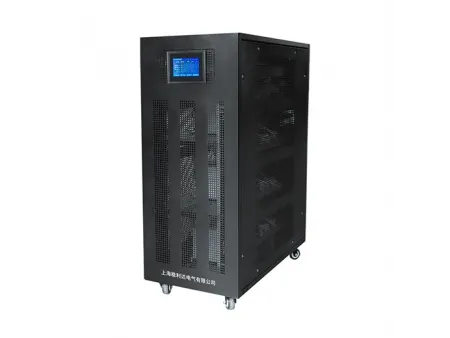
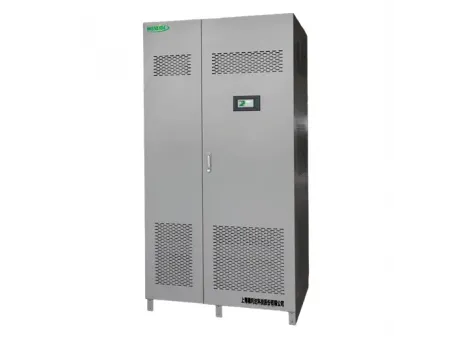

Solid-state voltage regulator for maintenance-free voltage stabilization and delivering highly stable output voltage for electrical equipment
- Rated capacity: three-phase 10–1600 kVA, single-phase 3–50 kVA
- Phase number: single-phase or three-phase (optional)
- Input voltage: three-phase, five-wire 380 V (± 15%), single-phase 220 V (± 15 %) (customizable upon request)
- Output voltage: three-phase 380 V, single-phase 220 V (customizable upon request)
- Voltage regulation accuracy: adjustable within ± 1 % to ± 5 % (factory default ± 2 %)
- Operating frequency:50 Hz / 60 Hz
- Efficiency: ≥ 98 %
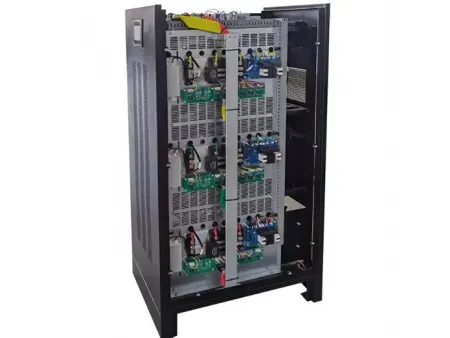
Static voltage stabilizers automatically adjust the output voltage according to fluctuations in the input power supply. Their main function is to keep the voltage within a defined range, ensuring that electrical equipment operates safely at its rated level. Unlike servo voltage stabilizers, static models use a solid-state system composed of a compensation transformer, main circuit, and SCR modules controlled by a microprocessor. By using pre-programmed control, static stabilizers adjust the voltage in real time and make precise corrections as needed. Since there are no moving parts, the response is faster and the operation stays stable without the need for maintenance.
- Static voltage stabilizers respond within milliseconds by using DSP control chips, SCR non-contact switches, and zero-crossing technology. This electronic control allows fast and accurate voltage adjustment without any mechanical components.
- They regulate voltage dynamically through independent three-phase control, detecting input fluctuations in real time and compensating automatically. This design keeps performance stable even with fully unbalanced loads or inconsistent grid voltage.
- Their output voltage stays steady and accurate, and the waveform remains clean, which helps connected equipment run smoothly without power fluctuations.
- These stabilizers operate reliably in environments from –40°C to 50°C and support a wide range of loads, including resistive, inductive, and impact types. Thanks to their non-contact structure, they avoid wear, sparks, and mechanical failure, allowing long-term, maintenance-free use.
- Each voltage regulating unit includes an LCD touch screen that displays voltage and current data in real time, supports RS485 communication, and provides automatic bypass, delayed start-up, and self-recovery functions for easier monitoring.
- Multiple protection mechanisms are integrated, including over-voltage, under-voltage, overload, and short-circuit protection, combined with automatic fault detection to improve operational safety.
- Static voltage stabilizers are compatible with precision and medical equipment such as CT scanners and laboratory instruments. True RMS voltage control eliminates fluctuations while maintaining silent operation with no electromagnetic interference.
- The compact, environmentally friendly design combines SCR modules, compensation transformers, and main circuits in a smaller structure that reduces size and weight compared with conventional stabilizers. Non-corrosive, non-flammable materials are used to meet modern safety and environmental standards.
| Product type | Three-Phase Static Voltage Stabilizer (Non-Contact Voltage Stabilizer) | Single-Phase Static Voltage Stabilizer (Non-Contact Voltage Stabilizer) | |
| Model | ZSBW-#####KVA | ZDBW-#####KVA | |
| Rated capacity | 10–1600kVA | 3–50kVA | |
| Input voltage | Three-phase, five-wire 380V (±15%) | Single-phase 220V (±15%) | |
| Customizable upon request | |||
| Output voltage | Three-phase 380V | Single-phase 220V | |
| Customizable upon request | |||
| Three-phase unbalance | Automatic balancing of three-phase output voltage | ||
| Voltage regulation accuracy | Adjustable within ±1% to ±5% (factory default ±2%) | ||
| Delayed output | Voltage output after stabilization to avoid equipment impact | ||
| Operating frequency | 50Hz/60Hz | ||
| Withstand voltage | 2000V for 1 minute without breakdown | ||
| Waveform distortion | No additional waveform distortion (static) | ||
| Efficiency | ≥98% | ||
| Insulation resistance | ≥2MΩ | ||
| Response time | Fast response: 20-100ms | ||
| Overload capacity | 5 times the rated current for 1 second | ||
| Protection functions | Over-voltage, under-voltage, overload, over-current, short-circuit, and bypass protection Phase loss and phase-sequence protection for three-phase models | ||
| Human-machine interface | Digital display for operating status, fault indication, parameter settings, data query, and real-time display of voltage and current | ||
| Voltage regulation mode |
| ||
| Operating environment | Ambient temperature | -15℃ to 45℃ | |
| Altitude | ≤2000m | ||
| Relative humidity | ≤90% | ||
| Installation conditions | Free from gases, steam, chemical precipitates, dust, and other explosive or corrosive media that may affect insulation performance | ||
| Storage temperature | -40℃ to 70℃ | ||
| Enclosure protection level | IP20 as standard (higher protection levels are customizable upon request) | ||
| Standards compliance | YD/T1270-200 | ||
- Industrial EquipmentIdeal for workshops, manufacturing lines, and automated production systems. Provides steady power for CNC machines, air compressors, laser cutters, and metal processing equipment to keep operations precise and stable.
- Heavy MachineryUsed for equipment with frequent impact loads or voltage fluctuations, such as cranes, lifting systems, and laser cutting machines. Ensures stable voltage for consistent power and safe operation.
- Medical and Laboratory EquipmentIdeal for sensitive instruments like MRI scanners, CT machines, spectrometers, and electron microscopes that need stable voltage to avoid interference and maintain precision.
- Public InfrastructureSuitable for communication base stations, radio and TV transmitters where stable voltage and fast response are needed to reduce interference and keep systems running continuously.
- Transportation SystemsUsed in railway signaling, metro power supply, and highway or tunnel monitoring systems that require fast voltage response and reliable operation.
- Voltage-Unstable LocationsIdeal for places such as shopping centers, hotels, HVAC systems, lighting networks, elevators, and wineries where voltage fluctuations can affect equipment performance.
- Remote and Special LocationsUsed in areas such as rural power supply, unmanned communication stations, and weather monitoring sites that need stable voltage for reliable operation.
- Low-Noise EnvironmentsSuitable for locations sensitive to sound or interference, including laboratories and aerospace facilities.
- Challenging ConditionsCan be installed in environments with high humidity, dust, vibration, or salt exposure that could otherwise damage electrical components.
During the start-up of welding or painting systems in automotive production, the surge in power demand might result in voltage drops, unstable equipment performance, and higher power consumption. How can these voltage drops, and power fluctuations be solved in automotive workshops?
For this type of environment, a combination of a voltage stabilizer, Static Var Generator (SVG), and laminated busbar is the most suitable solution. The stabilizer minimizes voltage drops during machine start-up, ensuring smooth and reliable operation. The SVG provides fast and accurate reactive power compensation (response time <50 ms), which improves power factor and reduces electricity costs. Laminated busbars help distribute current efficiently within control cabinets and machines, reducing transmission losses and supporting the heavy-duty, fast-paced demands of automotive manufacturing lines.
How is an SVG different from traditional capacitor-based compensation systems, and why has it become the preferred solution for many industrial users?
The main difference lies in how traditional capacitor banks and SVGs respond to changes in reactive power. Traditional capacitors use a fixed compensation capacity, which makes their response relatively slow, typically around 200 milliseconds or more, and this delay often leads to over- or under-compensation.
SVGs (Static Var Generator), however, work dynamically, as they provide real-time reactive power control, reacting in less than 50 milliseconds with high accuracy (around ±2 kvar). Modern industrial equipment, such as welding robots and variable-frequency drives, tends to operate with fluctuating loads, causing constant changes in reactive power. SVGs can track these variations instantly, stabilize the power factor, prevent penalty risks, and support both inductive and capacitive compensation. As a result, SVGs are increasingly implemented in various industries to ensure stable and efficient power performance.