Compression Gas Spring

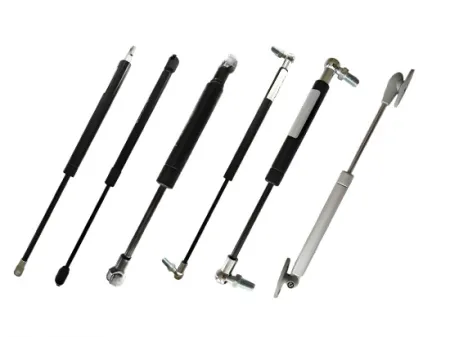


Gas springs designed to provide controlled pushing force for lifting, supporting and balancing applications in automotive, furniture and industrial equipment
Compression gas springs from Saiensi deliver stable support and damping performance across automotive, machinery, furniture, and industrial automation applications. Designed for versatility and precision, these products can be fully customized to meet specific requirements in load capacity, stroke length, and installation configuration, ensuring reliable operation under diverse working conditions.
A compression gas spring consists of a cylinder, piston rod, sealing and guide package, and mounting joints.
In operation, the sealed pressure cylinder is filled with inert gas or an oil-gas mixture, maintaining the chamber in a high-pressure state. The pressure difference between the two sides of the piston, caused by their different cross-sectional areas, drives the piston rod to extend freely, providing smooth support or damping motion.
- Piston rod: Alloy steel / stainless steel / aluminum alloy, with optional surface treatments such as chrome plating or nitriding (QPQ) for enhanced wear and corrosion resistance.
- Cylinder and end fitting: Stainless steel / alloy steel / aluminum alloy, available with electroplating, water-based, or oil-based coatings to suit different operating environments.
- Piston: Powder metallurgy / aluminum alloy / alloy steel, ensuring reliable sealing and long service life.
| d(mm) | D(mm) | S(mm) | L(mm) | Force F1(N) |
| 4 | 12 | 20-200 | 115-465 | 5-150 |
| 6 | 15 | 20-200 | 115-465 | 50-400 |
| 8 | 18 | 50-350 | 190-775 | 100-700 |
| 10 | 22 | 40-500 | 170-1090 | 100-1200 |
| 12 | 27 | 100-500 | 270-1120 | 500-1500 |
| 14 | 27 | 100-500 | 270-1120 | 500-2500 |
What are the advantages of compression gas springs compared with traditional mechanical springs?
- Stable control: Slower motion and smaller dynamic force variation (elasticity coefficient X typically between 1.2–1.4) make them easier to regulate.
- Smooth operation: The near-linear elasticity curve provides a more comfortable, steady, and controlled movement during opening and closing.