Ceramic Wear Liners
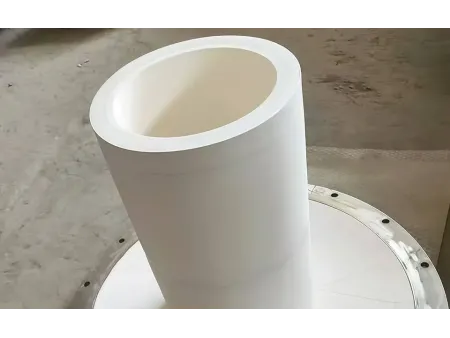
Ceramic wear liners are composite wear-resistant panels manufactured by bonding and assembling wear-resistant ceramics (alumina or zirconia). According to structure, they can be classified into three types: ceramic liners, dual-layer composite liners (ceramic rubber, ceramic steel plate), and triple-layer composite liners (ceramic rubber steel plate). They are widely used for equipment wear protection to extend service life.
- Outstanding wear resistance: Ceramics feature very high hardness, with microhardness HV reaching 1000-1800, approximately ten times that of quenched medium-carbon steel and superior to tungsten carbide. They effectively resist high-velocity fluid erosion and particle abrasion.
- Excellent corrosion resistance: Ceramics are chemically neutral and highly stable, resistant to various inorganic acids, organic acids, and organic solvents. Their corrosion resistance exceeds that of stainless steel by more than ten times.
- High temperature resistance: Capable of withstanding temperatures above 2000℃, ceramics can operate continuously within a range of -50℃ to 900℃ while maintaining stable performance in high-temperature environments.
In addition, ceramic wear liners offer low weight, good electrical insulation, and low friction, helping reduce equipment load, prevent current leakage, and minimize energy loss during material conveying.
- Equipment fit: Suitable for a wide range of equipment geometries, including pipelines, vessels, and special-shaped components. Ceramic liners closely conform to equipment surfaces, preventing localized accelerated wear caused by gaps.
- Installation methods and retention strength: Multiple reliable installation methods are available, such as adhesive bonding, welding, and thermal spraying. These ensure strong retention under vibration and impact during operation, preventing liner detachment.
Ceramic wear liners provide excellent heat resistance and erosion resistance, making them suitable for high-temperature dust conveying applications.
Yes. Ceramic liners can withstand high-hardness steel slag particles, effectively reducing equipment wear during pneumatic conveying.
When ceramic materials are exposed to rapid temperature changes or excessive temperature differences, thermal stress can occur, which may lead to cracking. To reduce this risk, it is recommended to increase and decrease the temperature gradually during use and to avoid sudden heating or cooling (thermal shock). The operating environment should always be controlled according to the product’s rated working temperature.