DC/DC Converter

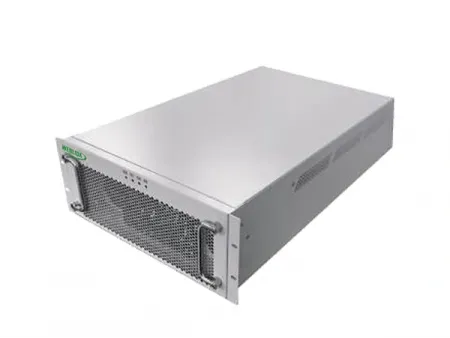
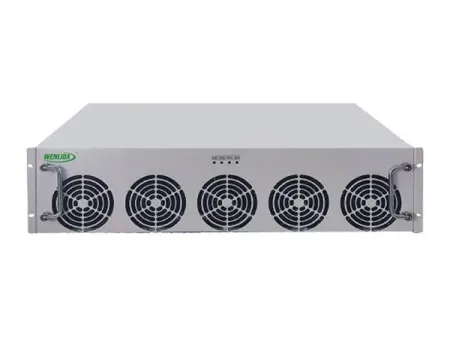
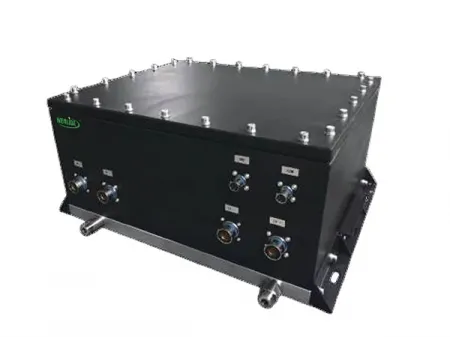

Combining boost converter (step-up), buck converter (step-down) and bidirectional DC/DC converter for versatile voltage conversion in renewable energy and energy storage systems
- Efficiency: ≥ 99%
- Rated power (kW): 1.66~200kW
- Input voltage range (Vdc): 0~2000V
- Output voltage range (Vdc): 0~1200V
- Voltage regulation accuracy: ±0.5%FS / ±1%FS
- Current regulation accuracy: ±1%FS @ rated power, ± 0.5%FS @ rated power
- Operating mode: auto switch constant voltage, constant current (CV/CC), constant current (CC), constant voltage (CV), maximum power point tracking (MPPT), MPPT with constant voltage
- Communication interface: RS485 / CAN
- Protection level: IP 20 / IP 20 / IP 65
- Cooling method: air cooled / water cooled
DC/DC converters regulate direct current by converting it from one voltage level to another, ensuring stable and efficient power transfer across different applications. They operate by storing and releasing energy through inductors and capacitors, using high-frequency switching devices such as MOSFETs or IGBTs. Depending on the configuration, they can perform step-up (boost), step-down (buck), or bidirectional conversion to support both charging and discharging in energy storage systems. Their versatility makes them indispensable in renewable energy projects, battery management systems, and smart grids where voltage stability and efficiency are essential.
- DC/DC converters reach up to 98% conversion efficiency using wide bandgap semiconductor devices such as SiC, operating at switching frequencies in the hundreds of kilohertz, well above the 90–95% range of traditional converters.
- Support a broad voltage range, from 0 V for flow battery startup charging to 1500 V for renewable energy applications. Output voltage can be precisely controlled within ±1%.
- Offer fast dynamic response during transitions between charging and discharging, ensuring stable frequency regulation in wind and energy storage systems.
- Feature a modular “cluster-management” design that provides redundancy and fault tolerance. If one module fails, it automatically disconnects while others continue operating safely.
- Include multiple protection functions, overvoltage, overcurrent, and overtemperature safeguards, along with spike absorption and snubber circuits. Support wind turbine black-start capability and extend overall service life.
- Allow power modules to be connected in parallel for flexible capacity expansion, scaling easily from kilowatt to megawatt levels.
- Enable bidirectional energy flow for both charging and discharging, making DC/DC converters suitable for regenerative braking in electric vehicles and power control in energy storage systems.
- Use intelligent control algorithms such as fuzzy logic and neural networks to maintain SOC (State of Charge) balance between clusters and manage constant-current, constant-voltage, or constant-power modes.
- Employ liquid cooling for efficient heat dissipation, providing stable operation in high-temperature environments and industrial-grade protection for demanding sites such as mining and mobile platforms.
| Series | Air-Cooled 60V Series | Air-Cooled 900V Series | Air-Cooled 1200V Series | Air-Cooled 1500V Series | Air-Cooled 2000V Series | Air-Cooled SIC Series | ||||||
| Input side/High-voltage side | Efficiency (full load) | ≥ 99% | ≥ 99% | ≥ 98% | ≥ 96% | ≥ 96% | ≥ 96% | ≥ 98% | ||||
| Input voltage range (Vdc) | 0–60 | 0–950 (900–950@18/36/54kW) | 0–900 | 0–1200 | 0–1500 | 1100–2000 | 0–800 | |||||
| Input current range (A) | 0–33/0–66/0–100 | 0–120/0–200/0–350 | 0–40 | 0–50/0–100/0–150 | 0–50 | 0–100/0–150 | 0–100/0–150 | 0–100 | 0–20/0–40 | |||
| Output side/Low-Voltage side | Output voltage range (Vdc) | 0–60 | 0–950 (Vhigh×0.1< Vlow < Vhigh×0.9) | 0–950 (Vhigh×0.05< Vlow | 0–720 (Vhigh×0.1< Vlow | 0–760 (Vhigh×0.05< Vlow | 0–1080 (Vhigh×0.1< Vlow | 0–1140 (Vhigh×0.05< Vlow | 0–1000 (Vhigh×0.1< Vlow <1000) | 0–1000 (Vhigh×0.1< Vlow <1000) | 0–720 (Vhigh×0.1< Vlow | | |
| Rated power (kW) | 1.66/3.32/5 | 60/120/200 | 15 | 15 | 20/40/60 | 20 | 40/60 | 40/60 | 80 | 6/12 | ||
| Max. power (kW) | 2002/4/6 | 80/140/240 | 20 | 20 | 30/60/100 | 30 | 60/100 | 60/100 | 100 | 7.5/15 | ||
| Constant power voltage range (Vdc) | - | 500–810/600–810 | 500–850/600–850 | 600–720 | 600–760 | 700–1080 | 700–1140 | 600–100/680–1000 | 680–1000 | 500–800 | ||
| Output current range (A) | 0–33/0–66/0–100 | 0–120/0–200/0–350 | 0–40 | 0–40 | 0–50/0–100/0–150 | 0–50 | 0–100/0–150 | 0–100/0–150 | 0–150 | 0–20/0–40 | ||
| Voltage regulation accuracy | ±1%FS | ±1%FS | ±0.5%FS | ±1%FS | ±0.5%FS | ±1%FS | ±0.5%FS | ±0.5%FS | ±0.5%FS | ±1%FS | ||
| Current regulation accuracy | ±1%FS @ rated power | ±1%FS @ rated power | ±0.5%FS @ rated power | ±1%FS @ rated power | ±0.5%FS @ rated power | ±1%FS @ rated power | ±0.5%FS @ rated power | ±0.5%FS @ rated power | ±0.5%FS @ rated power | ±1%FS @ rated power | ||
| Response time | ≤ 100ms | ≤ 100ms | ≤ 100ms | ≤ 5ms | ≤ 100ms | ≤ 5ms | ≤ 100ms | ≤ 100ms | ≤ 100ms | |||
| Operating mode | Auto switch | Constant voltage/constant current (CV/CC) Constant current (CC) Constant voltage (CV) Maximum power point tracking (MPPT), MPPT with constant voltage | Constant voltage/constant current (CV/CC) Constant current (CC) Constant voltage (CV) Maximum power point tracking (MPPT), MPPT with constant voltage | Constant voltage/constant current (CV/CC) Constant current (CC) Constant voltage (CV) Maximum power point tracking (MPPT), MPPT with constant voltage | Constant voltage/constant current (CV/CC) Constant current (CC) Constant voltage (CV) Maximum power point tracking (MPPT), MPPT with constant voltage | Constant voltage/constant current (CV/CC) Constant current (CC) Constant voltage (CV) Maximum power point tracking (MPPT), MPPT with constant voltage | ||||||
| Communication interface | RS485 | Modbus RTU (isolated), 1 channel | Modbus RTU (isolated), 1 channel | Modbus RTU (isolated), 2 channels | Modbus RTU (isolated), 2 channels | Modbus RTU (isolated), 2 channels | Modbus RTU (isolated), 2 channels | Modbus RTU (isolated), 2 channels | Modbus RTU (isolated), 2 channels | Modbus RTU (isolated), 2 channels | Modbus RTU (isolated), 1 channel | |
| CAN | CAN 2.0A/B (isolated), 1 channel | CAN 2.0A/B (isolated), 2 channels | CAN 2.0A/B (isolated), 1 channel BMS compatible | CAN 2.0A/B (isolated), 2 channels BMS compatible | CAN 2.0A/B (isolated), 1 channel BMS compatible | CAN 2.0A/B (isolated), 2 channels BMS compatible | CAN 2.0A/B (isolated), 1 channel BMS compatible | CAN 2.0A/B (isolated), 2 channels BMS compatible | CAN 2.0A/B (isolated), 2 channels BMS compatible | CAN 2.0A/B (isolated), 1 channel BMS compatible | ||
| Protection | High-voltage side | Over-voltage, under-voltage | Over-voltage, under-voltage, reverse polarity | Over-voltage, under-voltage, reverse polarity | Over-voltage, under-voltage, reverse polarity | Over-voltage, under-voltage, reverse polarity | Over-voltage, under-voltage, reverse polarity | Over-voltage, under-voltage, reverse polarity | ||||
| Low-Voltage side | Over-voltage, under-voltage, over-current | Over-voltage, under-voltage, reverse polarity, over-current | Over-voltage, under-voltage, reverse polarity, over-current, short-circuit | Over-voltage, under-voltage, reverse polarity, over-current, short-circuit | Over-voltage, under-voltage, reverse polarity, over-current, short-circuit | Over-voltage, under-voltage, reverse polarity, over-current, short-circuit | Over-voltage, under-voltage, reverse polarity, over-current | |||||
| Other protections | Over-temperature protection with automatic recovery after fault removal | Over-temperature protection with automatic recovery after fault removal | Over-temperature protection with automatic recovery after fault removal | Over-temperature protection with automatic recovery after fault removal | ||||||||
| General | Protection level | IP 20 | IP 54 | IP 20 | IP 20 | |||||||
| Installation method | Left and right mounting ears | M8 screws for radiator mounting | M8 screws for radiator mounting | Left and right mounting ears | ||||||||
| Operating temperature | -20℃ to 45℃ (derating required above 45°C) | -20℃ to 45℃ (derating required above 45°C) | -20℃ to 45℃ (derating required above 45°C) | -20℃ to 45℃ (derating required above 45°C) | ||||||||
| Operating environment | Relative humidity: < 95%RH non-condensing Altitude: < 2000m (for above 2000m, usage should be derated according to GB/T3859.2) | Relative humidity: < 95%RH non-condensing Altitude: < 2000m (for above 2000m, usage should be derated according to GB/T3859.2) | Relative humidity: < 95%RH non-condensing Altitude: < 2000m (for above 2000m, usage should be derated according to GB/T3859.2) | Relative humidity: < 95%RH non-condensing Altitude: < 2000m (for above 2000m, usage should be derated according to GB/T3859.2) | ||||||||
| Noise level | < 45dB at 1m distance under rated operation | < 45dB at 1m distance under rated operation | < 45dB at 1m distance under rated operation | < 45dB at 1m distance under rated operation | ||||||||
| Dimensions (D×W×H) | 300×100×88mm | 500×250×154mm 500×363×154mm 500×543×154mm (without mounting ear) | 600×363×154mm 600/543/154 mm (mounting ear) | 390×185×270mm | 390×185×270mm | 600×363×154mm 600×543×154mm | 600×363×154mm | 552×445×176mm 600×543×154mm | 600×685×198mm | 255×183×110mm | ||
| Weight | 2/3/4 | 20/36/54kg | 21/37kg | 25kg | 25kg | 21/37/55kg | 21kg | 37/55kg | 37/55kg | 60kg | 3.4/4kg | |
| Series | Water-Cooled 60V Series | Water-Cooled 900V Series | Water-Cooled 1200V Series | Water-Cooled SIC Series | ||||
| Input side/High-voltage side | Efficiency (full load) | ≥ 99% | ≥ 98% | ≥ 96% | ≥ 98% | ≥ 98% | ||
| Input voltage range (Vdc) | 0–60 | 0–900 | 0–1200 | 0–150 | ||||
| Input current range (A) | 0–33/0–66/0–100 | 0–150/0–200 | 0–150/0–200/0–360 | 0–100/0–200 | 0–100/0–200 | 0–360 | 0–250 | |
| Output side/Low-Voltage side | Output voltage range (Vdc) | 0–60 | 0–720 | 0–760 | 0–1080 | 0–1140 | 0–1140 | 0–135 |
Vhigh×0.1< Vlow | Vhigh×0.05< Vlow | Vhigh×0.1< Vlow | Vhigh×0.05< Vlow | Vhigh×0.05< Vlow | Vhigh×0.1< Vlow | | |||
| Rated power (kW) | 1.66/3.32/5 | 40/60 | 40/60/150 | 40/60 | 40/60 | 170 | 15 | |
| Max. power (kW) | 2002/4/6 | 60/100 | 60/100/200 | 60/100 | 60/100 | 250 | 20 | |
| Constant power voltage range (Vdc) | - | 500–720/600–720 | 500–760/600–760/650–760 | 700–1080/600–1080 | 700–1140/600–1140 | 900–1140 | 80–135 | |
| Output current range (A) | 0–33/0–66/0–100 | 0–150/0–200 | 0–150/0–200/0–360 | 0–100/0–200 | 0–100/0–200 | 0–360 | 0–250 | |
| Voltage regulation accuracy | ±1%FS | ±1%FS | ±0.5%FS | ±1%FS | ±0.5%FS | ±0.5%FS | ±0.5%FS | |
| Current regulation accuracy | ±1%FS @ rated power | ±1%FS @ rated power | ±0.5%FS @ rated power | ±1%FS @ rated power | ±0.5%FS @ rated power | ±0.5%FS @ rated power | ±0.5%FS @ rated power | |
| Response time | ≤ 100ms | ≤ 100ms | ≤ 5ms | ≤ 100ms | ≤ 5ms | ≤ 5ms | ≤ 5ms | |
| Operating mode | Auto switch | Constant voltage/constant current (CV/CC) Constant current (CC) Constant voltage (CV) Maximum power point tracking (MPPT), MPPT with constant voltage | Constant voltage/constant current (CV/CC) Constant current (CC) Constant voltage (CV) Maximum power point tracking (MPPT), MPPT with constant voltage | Constant voltage/constant current (CV/CC) Constant current (CC) Constant voltage (CV) Maximum power point tracking (MPPT), MPPT with constant voltage | Constant voltage/constant current (CV/CC) Constant current (CC) Constant voltage (CV) Maximum power point tracking (MPPT), MPPT with constant voltage | |||
| Communication interface | RS 485 | Modbus RTU (isolated), 1 channel | Modbus RTU (isolated), 2 channels | Modbus RTU (isolated), 2 channels | Modbus RTU (isolated), 2 channels | Modbus RTU (isolated), 2 channels | Modbus RTU (isolated), 2 channels | Modbus RTU (isolated), 2 channels |
| CAN | CAN 2.0A/B (isolated), 1 channel | CAN 2.0A/B (isolated), 1 channel BMS compatible | CAN 2.0A/B (isolated), 2 channels BMS compatible | CAN 2.0A/B (isolated), 1 channel BMS compatible | CAN 2.0A/B (isolated), 2 channels BMS compatible | CAN 2.0A/B (isolated), 2 channels BMS compatible | CAN 2.0A/B (isolated), 2 channels BMS compatible | |
| Protection | High-voltage side | Over-voltage, under-voltage | Over-voltage, under-voltage, reverse polarity | Over-voltage, under-voltage, reverse polarity | Over-voltage, under-voltage, reverse polarity | |||
| Low-Voltage side | Over-voltage, under-voltage, over-current | Over-voltage, under-voltage, reverse polarity, over-current, short-circuit | Over-voltage, under-voltage, reverse polarity, over-current, short-circuit | Over-voltage, under-voltage, reverse polarity, over-current, short-circuit | ||||
| Other protections | Over-temperature protection with automatic recovery after fault removal | Over-temperature protection with automatic recovery after fault removal | Over-temperature protection with automatic recovery after fault removal | Over-temperature protection with automatic recovery after fault removal | ||||
| General | Protection level | IP 65 | IP 65 | IP 65 | IP 65 | |||
| Installation method | Fixed on both left and right sides at bottom using mounting brackets | Fixed on both left and right sides at bottom using mounting brackets | Fixed on both left and right sides at bottom using mounting brackets | Left and right mounting ears | ||||
| Operating temperature | Inlet water temperature: < 30°C Outlet water temperature: < 80°C | Inlet water temperature: <30°C Outlet water temperature:< 80°C | Inlet water temperature:< 30°C Outlet water temperature:< 80°C | Inlet water temperature:< 30°C Outlet water temperature:< 80°C | ||||
| Operating environment | Flow rate: ≥5L/min Flow resistance: < 15kPa | Flow rate: ≥15L/min Flow resistance:< 15kPa | Flow rate: ≥15L/min Flow resistance: < 15kPa | Flow rate: ≥15L/min Flow resistance: < 15kPa | ||||
| Noise level | < 45dB at 1m distance under rated operation | < 45dB at 1m distance under rated operation | < 45dB at 1m distance under rated operation | < 45dB at 1m distance under rated operation | ||||
| Dimensions (D×W×H) | 300×100×88mm 300×165×88mm 300×200×88mm | 460×400×200mm | 460×400×200mm 500×740×240mm | 460×400×200mm | 460×400×200mm | 500×740×240mm | 450×300×132mm | |
| Weight | 4/5/6 | 45/55 | 45/55/80 | 45/55 | 45/55 | 80 | 10 | |
- AC/DC Microgrids
- Wind and Solar Energy Storage
- Substation Backup Power and Mobile Power Supply Units
- Charge and Discharge Systems for Lithium and Lead-Acid Batteries
In oilfield energy storage projects, how can the DC power stored in batteries be converted into AC power for grid connection while allowing bidirectional charge and discharge control?
The recommended setup is a combination of DC/DC Converter and PCS (Power Conversion System). The DC/DC Converter adjusts the variable voltage of battery packs (for example, from 200V–800V to a stable 750V) and enables bidirectional charge–discharge operation. The PCS then converts DC into grid-compatible AC (such as 380V or 10kV), allowing smooth interaction between the storage system and the grid. This setup supports daytime power supply and nighttime recharging, helping reduce electricity costs in oilfield operations.
How do DC/DC Converters improve system efficiency in large-scale energy storage stations?
They regulate voltage precisely across multiple battery clusters, maintaining system stability and preventing energy loss during conversion. Combined with PCS units, DC/DC converters enhance power quality, improve overall efficiency, and ensure reliable grid response during peak demand.